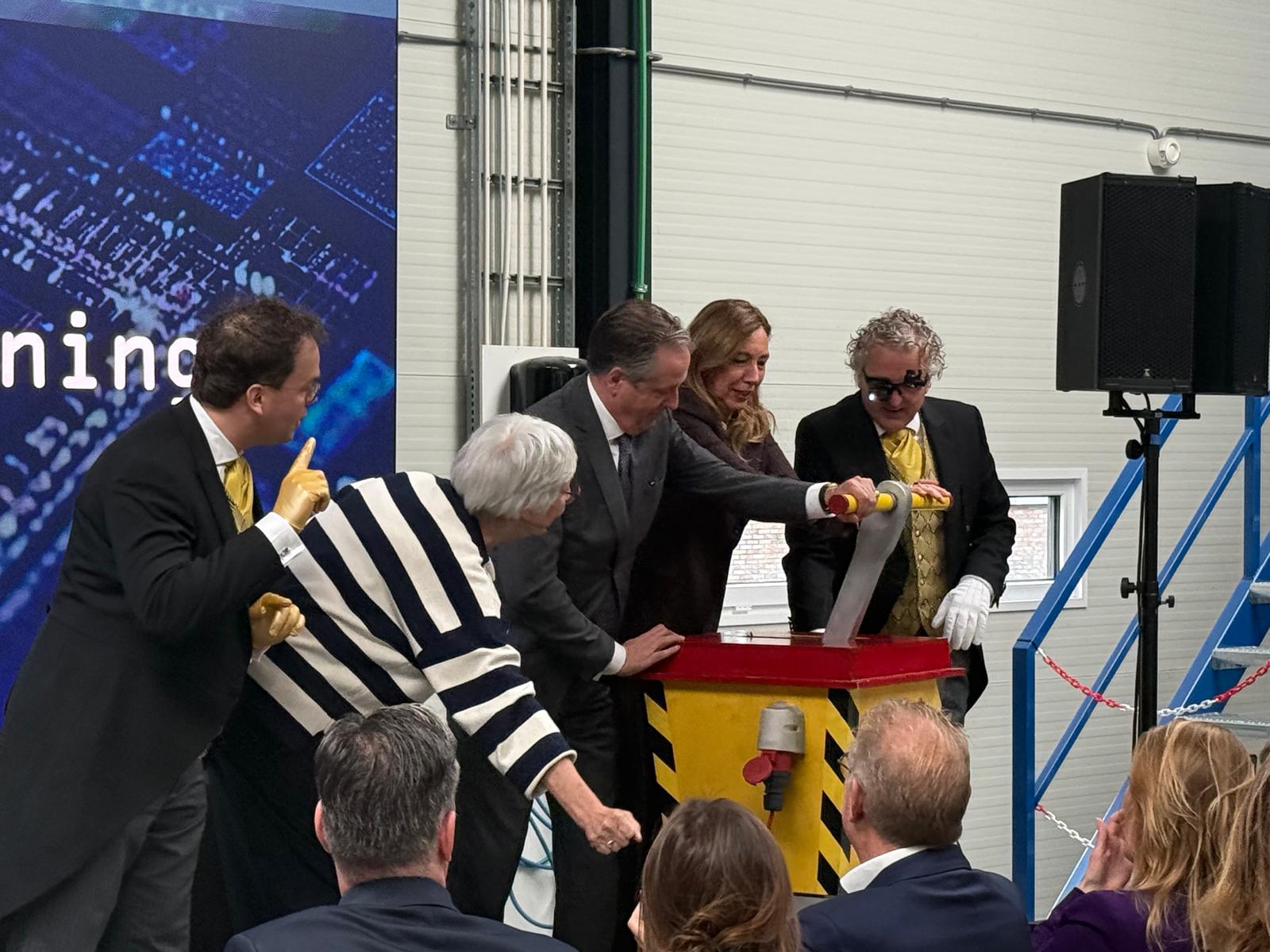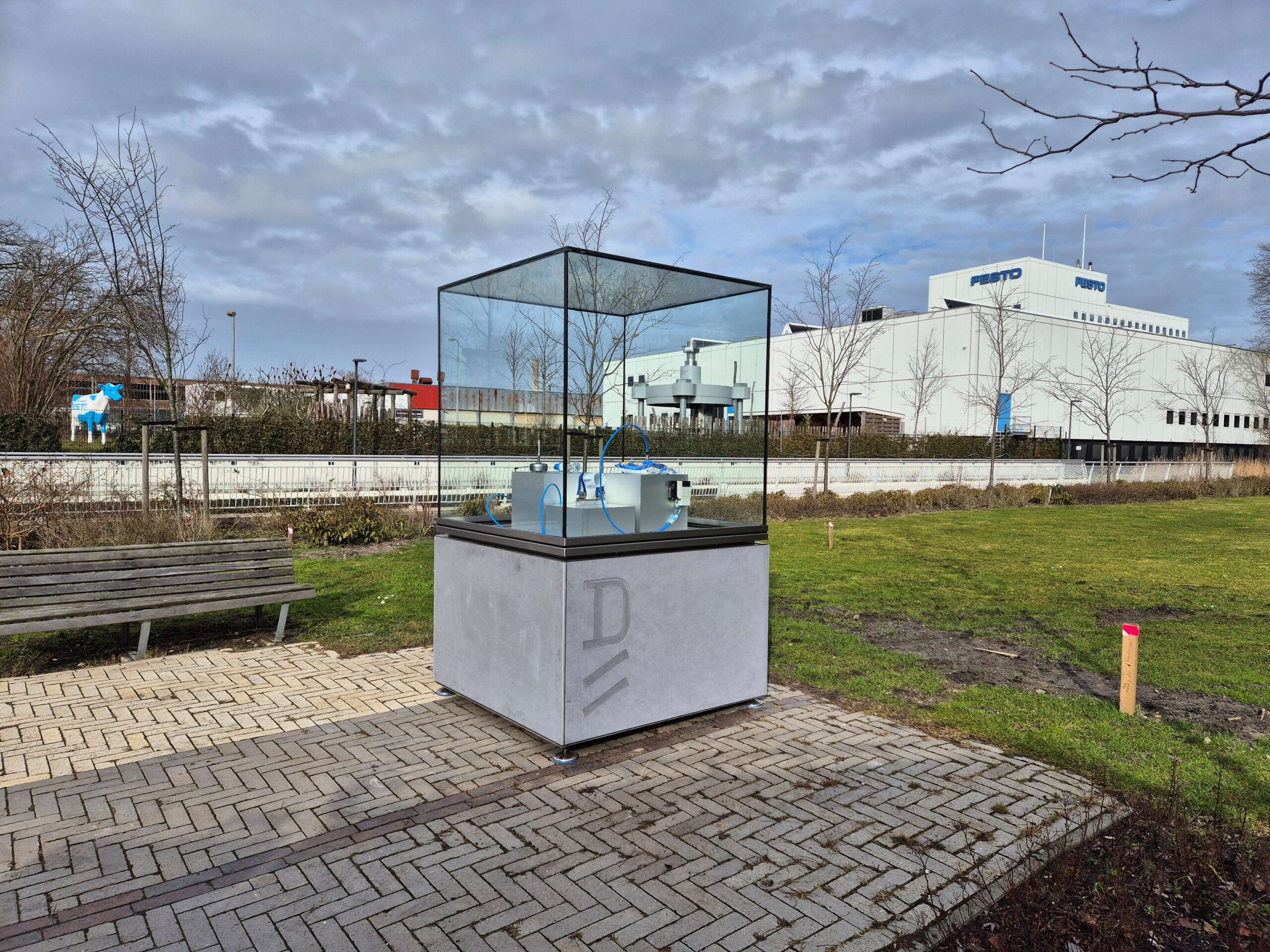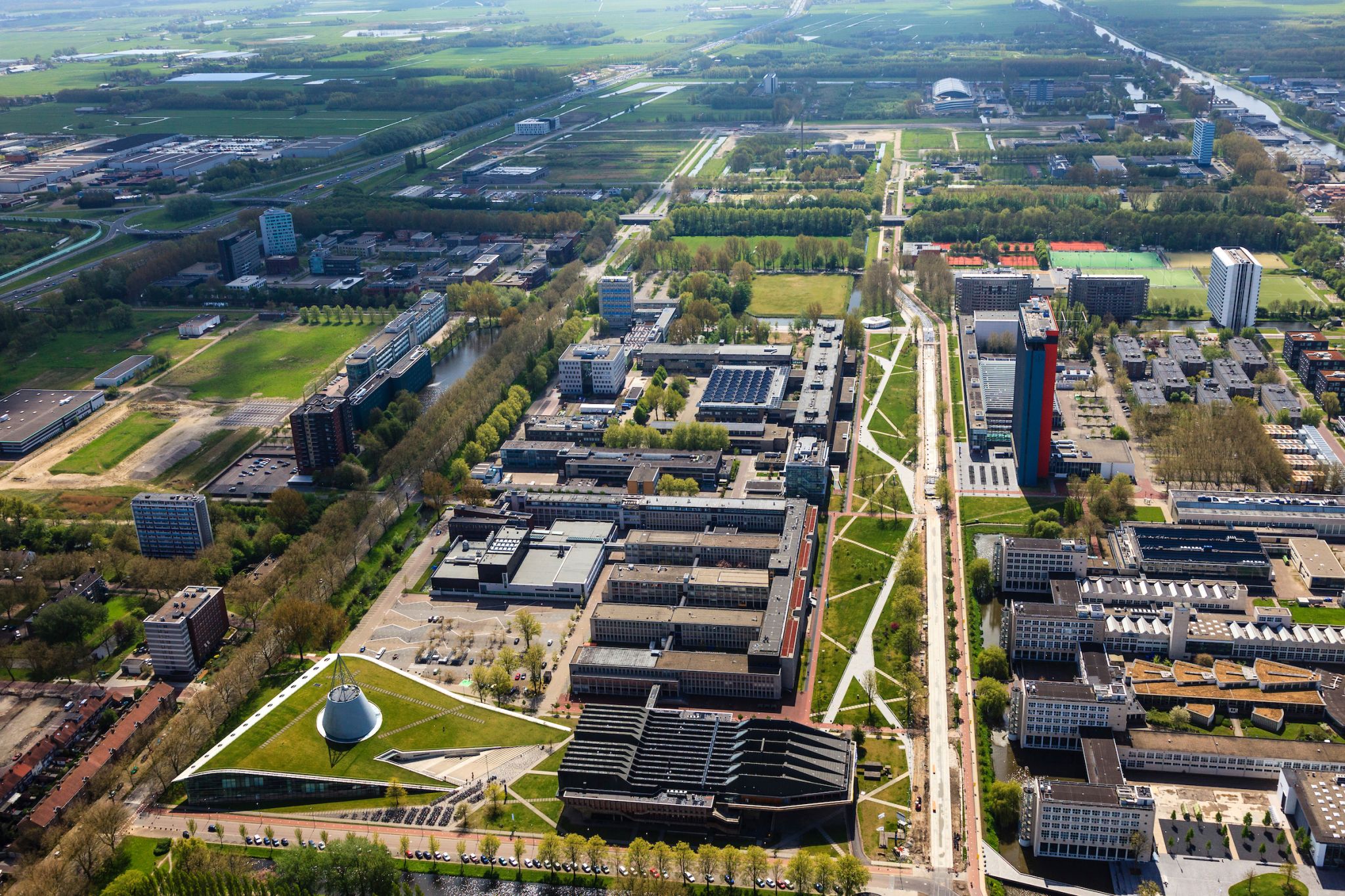
After years of preparation, research and construction, the moment has arrived: the geothermal well on TU Delft Campus has officially been put into operation. The well supplies sustainable heat to the majority of university buildings as well as several DUWO student housing complexes. As a result, CO₂ emissions from building heating will decrease significantly, with reductions expected to reach approximately 80% by 2027. Equally important is the substantial amount of scientific data generated by the well.
Energy transition = heat transition
This marks an important development, particularly when considering that in Europe nearly half of total energy demand is used for heating and cooling homes, offices and industrial processes. The energy transition is therefore just as much a heat transition.
With the Geothermie Delft project, TU Delft is making a distinctive contribution to this transition. On its own campus, TU Delft, together with Gaia Energy and EBN, has developed a geothermal well at a depth of two kilometres, extracting sustainable heat from deep beneath the surface.
Planning
What does this mean in practice? Initially, heat will be supplied to the buildings on TU Delft Campus as well as to three DUWO student housing complexes located on and around the campus. Later this year, Voorhof and Buitenhof (two residential neighbourhoods in Delft) are scheduled to be connected to the newly developed district heating network. The exact details of when and how this will take place will be carefully monitored and updated on this website.
From vision to action
According to Hester Bijl, Rector Magnificus of TU Delft, bringing the geothermal source into operation marks a major step towards a future-proof, climate-neutral campus and municipality.
‘This project began in 2007 with an idea from a group of Delft students who, over a drink in a pub, wondered whether we could heat our own campus using geothermal energy. Years of engineering and collaboration later, there is now a fully operational geothermal well right in the heart of the city. We are making our campus and the surrounding neighbourhoods more sustainable, conducting research two kilometers beneath our university, and training students to learn how to implement the energy transition in practice. That this succeeds here is no coincidence. It is what happens when public and private parties take responsibility together and persevere.’
Back to the source
How did the idea originate? Years ago, a group of TU Delft students (from what is now the Earth, Climate & Technology programme) conceived the plan to drill a geothermal well on the university campus. What initially seemed an extraordinarily ambitious idea proved feasible once it became clear that the campus is ideally located for such a project. Today, TU Delft serves as the driving force behind the scientific research programme of Geothermie Delft.
This geothermal project is unique because it serves two purposes, explains Phil Vardon, head of the Geothermal Science & Engineering research theme. ‘The well will provide heat, but above all it enables us to generate essential and much-needed scientific knowledge about geothermal energy. In addition, it offers students a unique opportunity: direct access to real-life data and hands-on experience. This is not only valuable for TU Delft, but also for accelerating the energy transition as a whole.’
Deeper insights
How does this knowledge-gathering process actually take place? The Delft well is equipped with an extensive array of measuring instruments. The data collected forms the foundation for advanced simulation models, allowing future geothermal projects to be mapped out with greater precision. This reduces risks and leads to better-informed decisions.
Phil Vardon explains: ‘Thanks to these comprehensive measurements, we can study with much greater accuracy how the geothermal reservoir functions. We examine the interaction between water and rock: how the chemical composition of the water changes, and how the properties of the rock affect flow at a depth of two thousand metres. We also investigate how the reservoir cools as cold water is injected, and what effect this has on the rock properties. Minerals, for example, can block the reservoir’s pores and hinder underground water flow. With this knowledge, we can better predict how long a geothermal well can continue to supply heat.’
What makes this project so exceptional, according to Vardon? ‘The fact that different specialists each contribute their own expertise to the research of the entire system. It is precisely this combination of strengths that makes it so exceptionally powerful. You can truly call it an Olympic-level team effort.’
A unique combination
In short, TU Delft is simultaneously a researcher, site holder, and first user of the geothermal heat. By linking research and innovation directly to an operational well, unique opportunities arise for both education and science. ‘Having this working well on our campus offers enormous advantages. By harnessing geothermal energy and sharing that knowledge, we support other geothermal projects in the Netherlands and beyond, while also contributing to a wide range of climate goals,’ concludes Vardon.
After years of preparation, research and collaboration, the moment has arrived: Geothermie Delft is now supplying sustainable heat from deep underground to buildings and residences on the TU Delft Campus. At the end of February 2026, we will mark this special milestone with the official commissioning of the geothermal well, featuring both an informative and celebratory programme on our campus.