Greening the campus
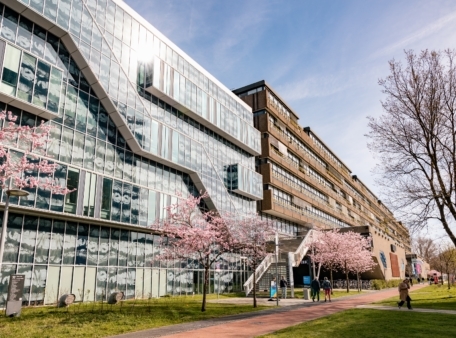
TU Delft is actively committed to making its campus greener and more climate resilient. Through a range of greening projects, TU Delft tries to enhance its biodiversity and create an enjoyable living environment for both people and wildlife. These projects play an important role in achieving TU Delft’s sustainability ambitions.
EcoCampus Development Framework
The greening of the campus is set out in the EcoCampus Development Framework. This framework is a further elaboration of the Sustainable TU Delft – Vision, Ambition and Action Plan for a Climate University published in June 2022.
The aim is to create a climate-adaptive campus by 2030: a green, healthy and pleasant environment for both people and wildlife. The Development Framework translates this ambition into clear guidelines for buildings and outdoor spaces, with a focus on greenery, biodiversity, and adapting the campus to a changing climate.
In this way, the Development Framework provides guiding principles for the continued greening and sustainability of the campus and for the development of the EcoCampus of the future.
Green projects
Urban Climate Grove
Among the series of greening projects on campus, the Urban Climate Forest near the Faculty of Architecture and the Built Environment was the first project to be completed. A fully paved forecourt has been transformed into a tree-rich wadi (a landscaped area designed to collect and infiltrate rainwater). It is an attractive place for relaxation, while also providing opportunities for new scientific research and contributing to solutions for societal challenges arising from climate change.
More information can be found on this project page.
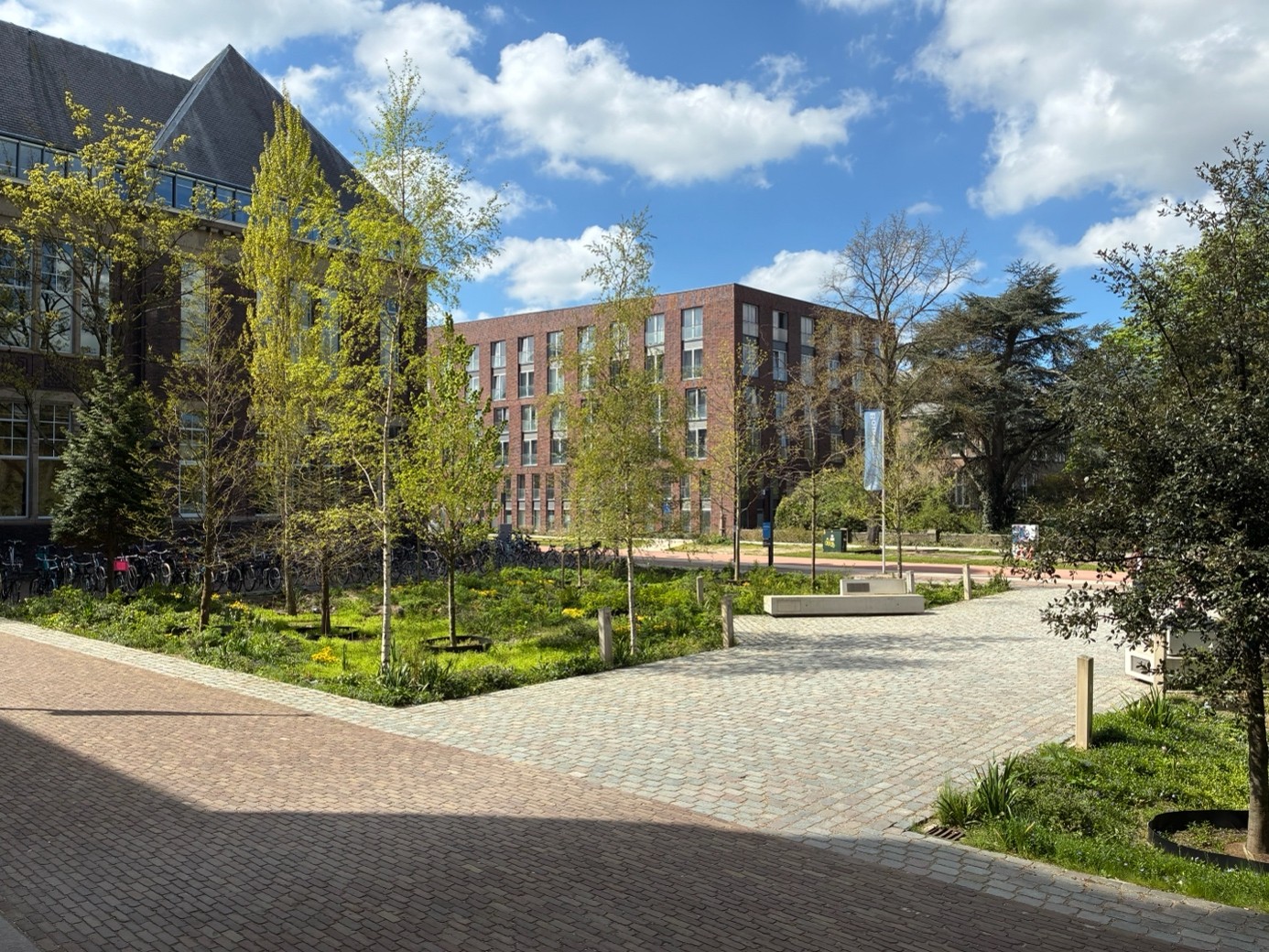
Greening of Landbergstraat and the TPM Building Façades
As part of a sewer replacement project, Landbergstraat was redesigned and upgraded. The new design includes the construction of a wadi, in which a variety of tree species have been planted. In addition, green planting beds have been created featuring perennial plants, shrubs and multi-stemmed trees.
As part of this redevelopment, the façades of the Faculty of Technology, Policy and Management (TPM) were also greened, further enhancing the area’s biodiversity, environmental quality and climate resilience.
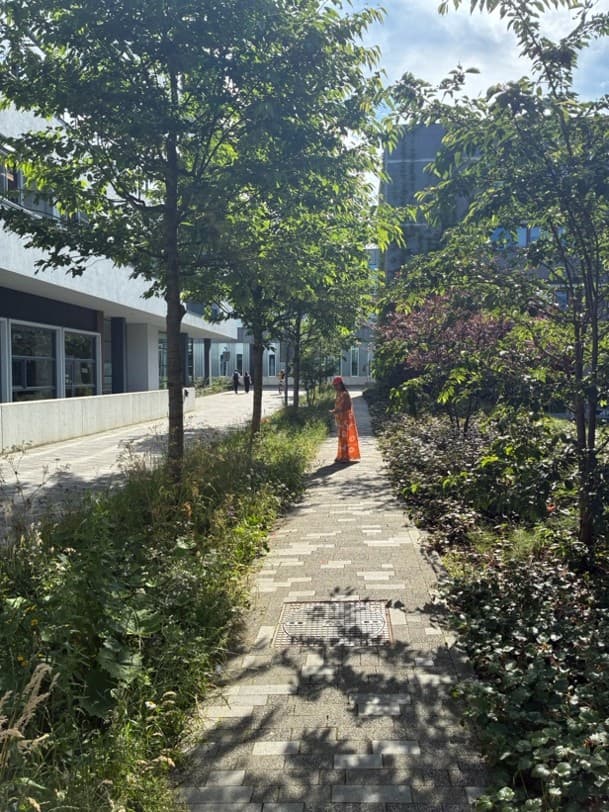
Stieltjesweg, Leeghwaterstraat and the Towing Tank at the Faculty of Mechanical Engineering
Other greening projects have been carried out along Stieltjesweg, Leeghwaterstraat, and on the façades of the towing tank at Building 34 (Faculty of Mechanical Engineering). Students contributed design proposals aimed at reducing paved surfaces and enhancing biodiversity across these areas.
• Stieltjesweg and Leeghwaterstraat: Improvements to the planting beds along Stieltjesweg and Leeghwaterstraat, including a renewed planting scheme and the creation of natural rainwater retention features (wadis) alongside existing green areas, have led to an enhancement of the ecological quality of these locations.
• Towing Tank, Faculty of Mechanical Engineering: Façade gardens and climbing plants have been added to the north and south façades of the towing tank at Building 34 (Faculty of Mechanical Engineering), helping to increase biodiversity, improve the visual quality of the site, and contribute to a greener campus environment.
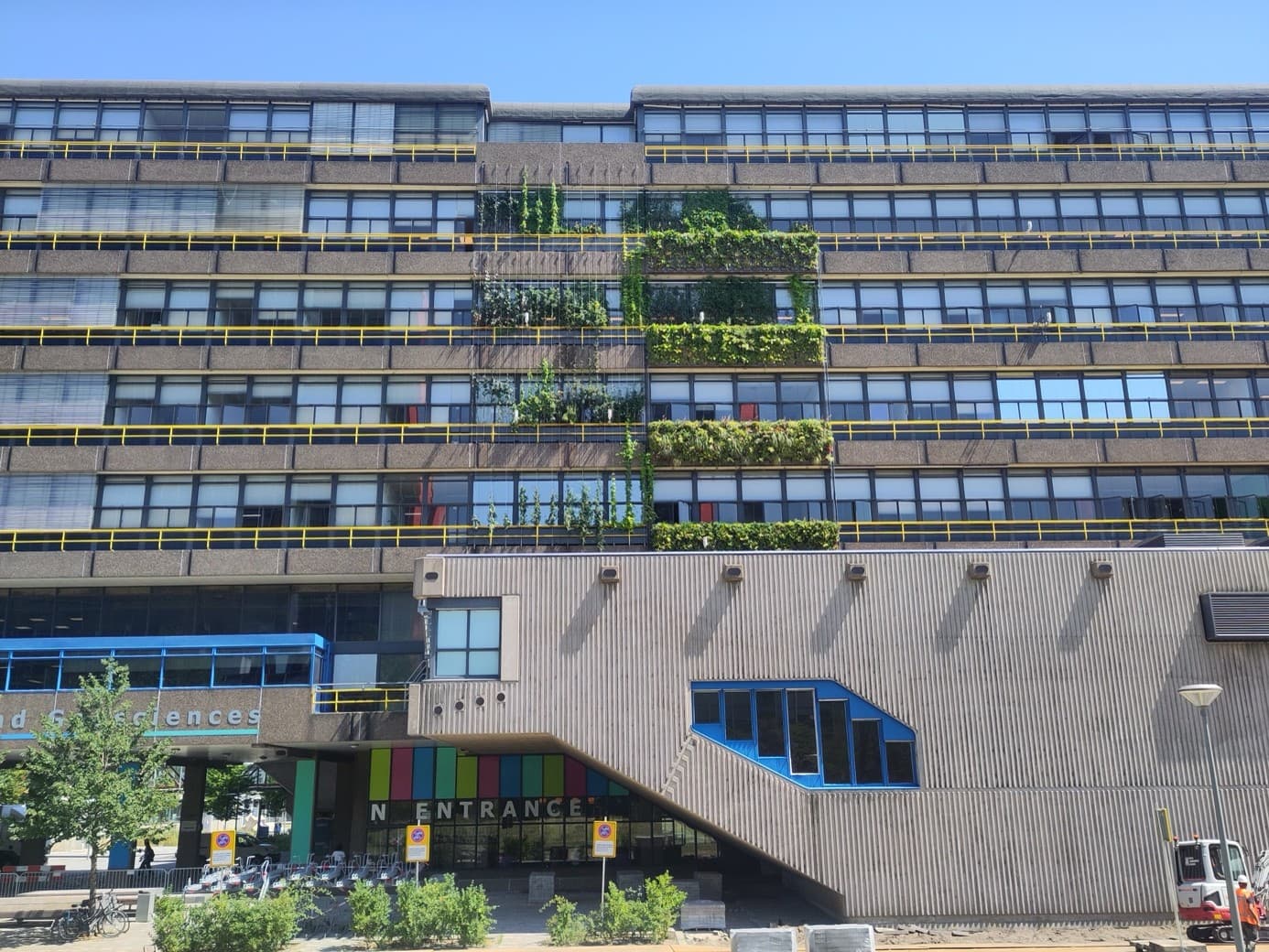
Green Façade at the Faculty of Civil Engineering and Geosciences Building
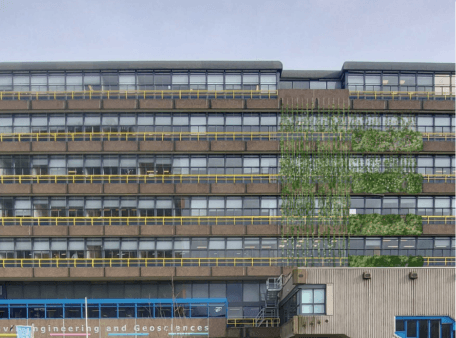
Several green façade systems have been installed on the western façade of Building 23, home to the Faculty of Civil Engineering and Geosciences (CEG). This living façade forms the central component of a collaborative research project led by Marc Ottelé (CEG) and Henri van Bennekom (Faculty of Architecture and the Built Environment).
More information about the project can be found on this project page.
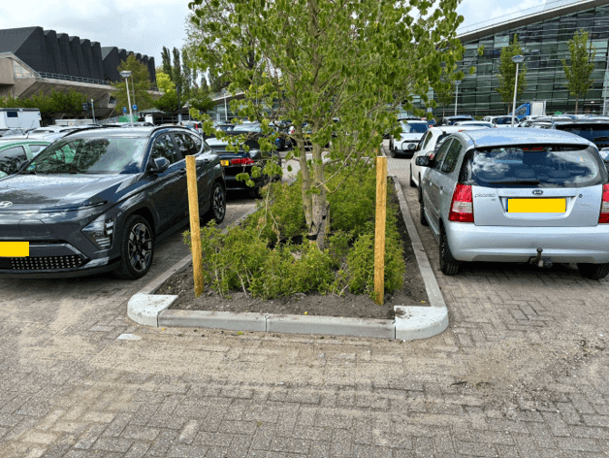
P1 Aula
The existing trees in P1 car park, adjacent to the Aula Conference Centre and along the side of Building 22, were in poor condition. Due to insufficient underground growing space, they had reached the end of their lifespan and required replacement.
This necessary intervention was also taken as an opportunity to enlarge the planting areas surrounding the trees. As a result, the new trees have more room to grow, and the car park has been redesigned with a greener appearance, without reducing the number of parking spaces available.
Under the new layout, eight planting beds measuring 10 × 2 metres have been created, each containing two multi-stemmed trees. In addition, eight new elm trees have been planted in individual planting beds along the side of Building 22, further enhancing the site’s green character and ecological value.
Cornelis Drebbelweg
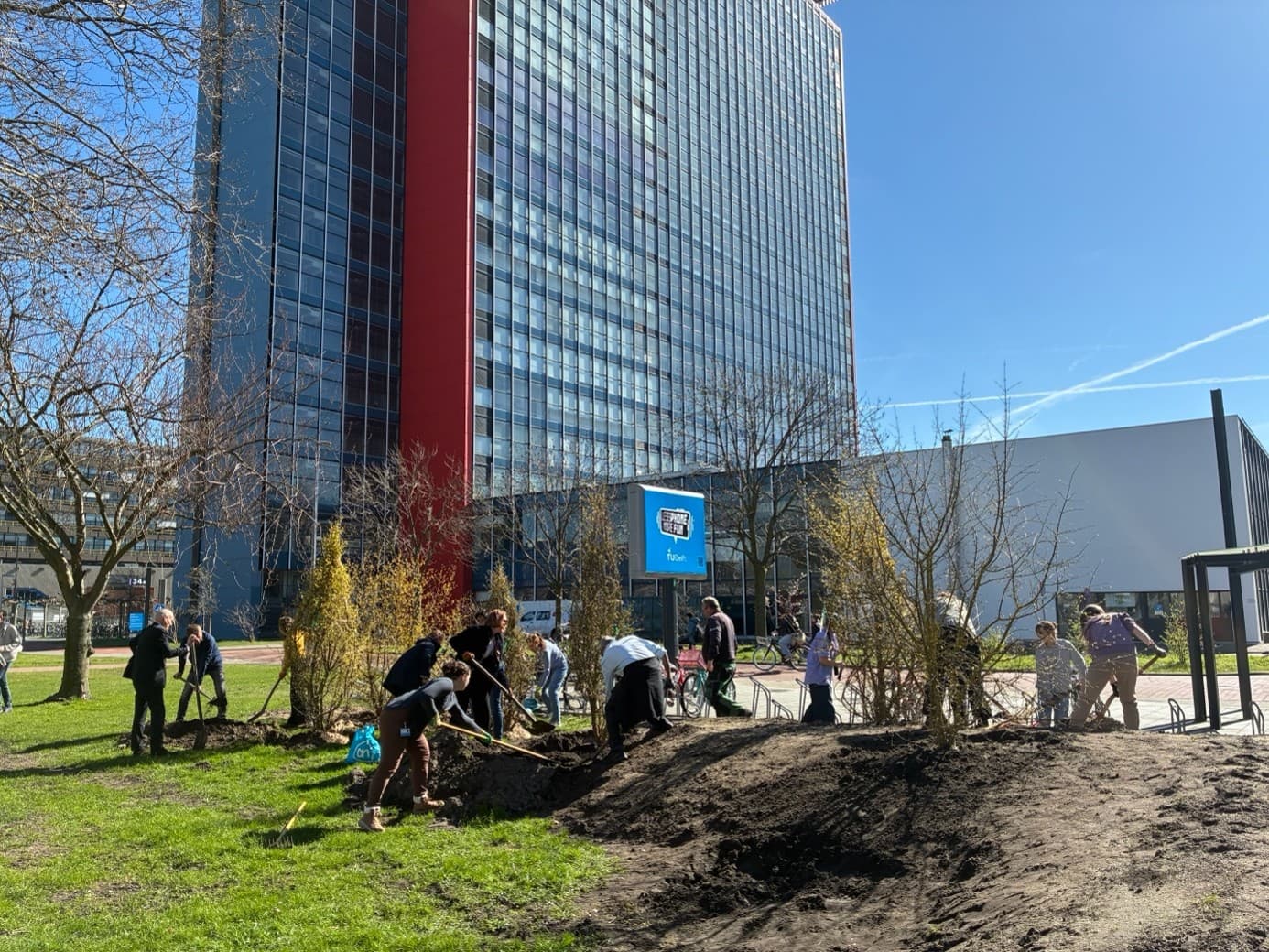
Along Cornelis Drebbelweg, next to the Freezone between Building 34a and the high-rise building of the Faculty of Electrical Engineering, Mathematics and Computer Science (EEMCS), a range of shrubs and multi-stemmed trees have been planted to enhance the area’s greenery and biodiversity.
In addition, a so-called bee mound has been created: a sand embankment containing dead wood that provides nesting opportunities for various species of wild bees, including ground-nesting sand bees. This feature supports local pollinator populations and contributes to the ecological diversity of the campus.
The project was carried out as part of the Dutch National Tree Planting Day, in collaboration with TU Delft students and staff.
Biodiversity monitor
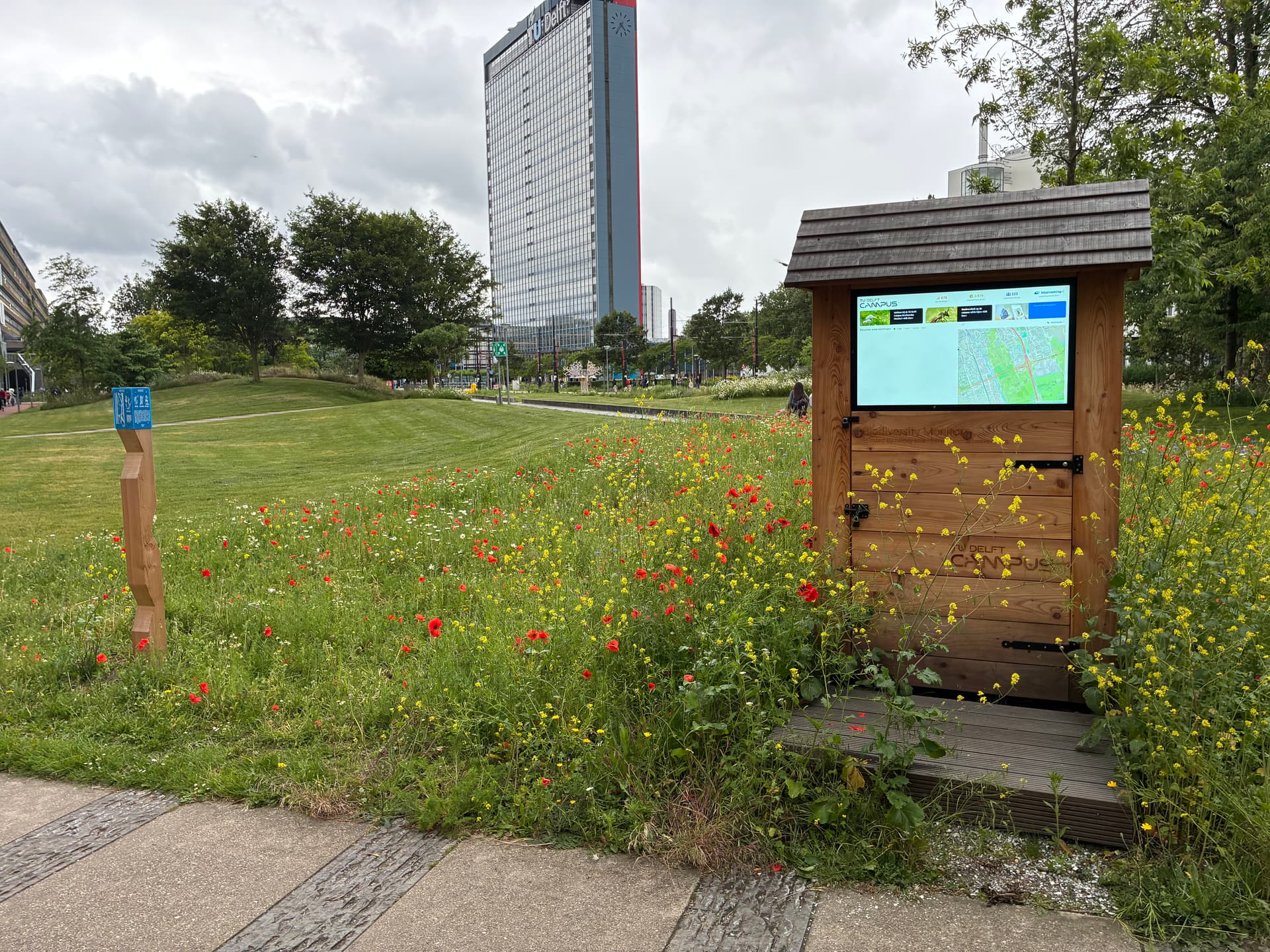
In Mekelpark, next to Building 22, there is an interactive touchscreen displaying up-to-date observations of flora and fauna across the TU Delft campus, along with information about the university’s EcoCampus vision. Students, staff, visitors and other campus users can contribute their own observations via the ObsIdentify app. In doing so, they help build a valuable knowledge base on campus biodiversity. These insights support initiatives aimed at making the campus greener.
The nature-inclusive column housing the screen also provides nesting opportunities for wild bees and wasps. Its installation was partly funded through the proceeds from the sale of campus-produced honey.
In development
Area Surrounding the Faculty of Mechanical Engineering
At present, the square in front of the main entrance to the Faculty of Mechanical Engineering (ME) is largely a paved area. To make the space more attractive for both people and wildlife, plans are currently being developed to better align the site with TU Delft’s ambitions for climate adaptation and biodiversity enhancement.
The proposed redesign includes a diverse mix of trees, shrubs and perennial plants, as well as multiple pathways and seating areas. The landscape design will complement the architecture of the faculty building while creating a greener, more inviting and ecologically valuable outdoor environment for students, staff and visitors.
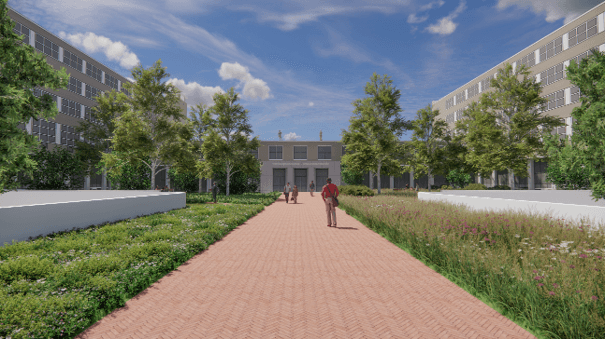
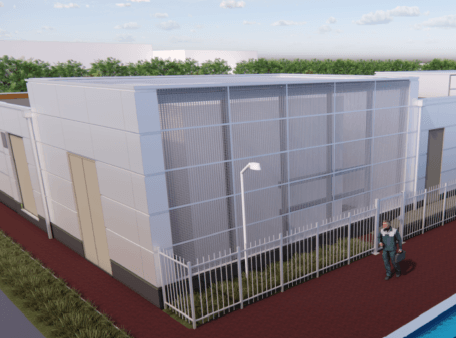
First Impression of the Greening of the Square at the Main Entrance of the Faculty of Mechanical Engineering
The bicycle parking facility previously located on the square in front of the main entrance has been relocated to the opposite side of the building, along Leeghwaterstraat. The development of this new bicycle parking area was used as an opportunity to give the site a greener and more climate-resilient character.
Part of the project has already been completed, including the planting of shrubs and hedges and the installation of semi-permeable surfacing. In the coming period, additional trees will be planted and semi-permeable pathways will be created to improve accessibility and further enhance the quality of the outdoor space.
Along EEMCS
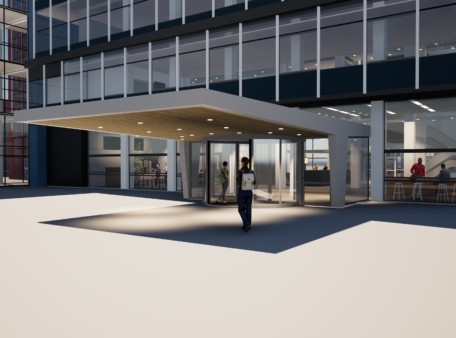
This project has likewise been aligned with ongoing campus developments, specifically the construction of a new entrance on the Feldmannweg side of the EEMCS high-rise building.
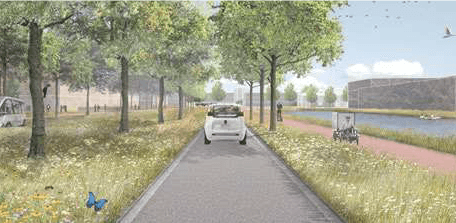
Plans are currently being developed to transform this area into a fully fledged pocket park, featuring additional trees, shrubs, species-rich grassland and seating areas. The project will not only create a more pleasant environment for faculty visitors, students and staff, but will also contribute to a more nature-inclusive and climate-adaptive campus.
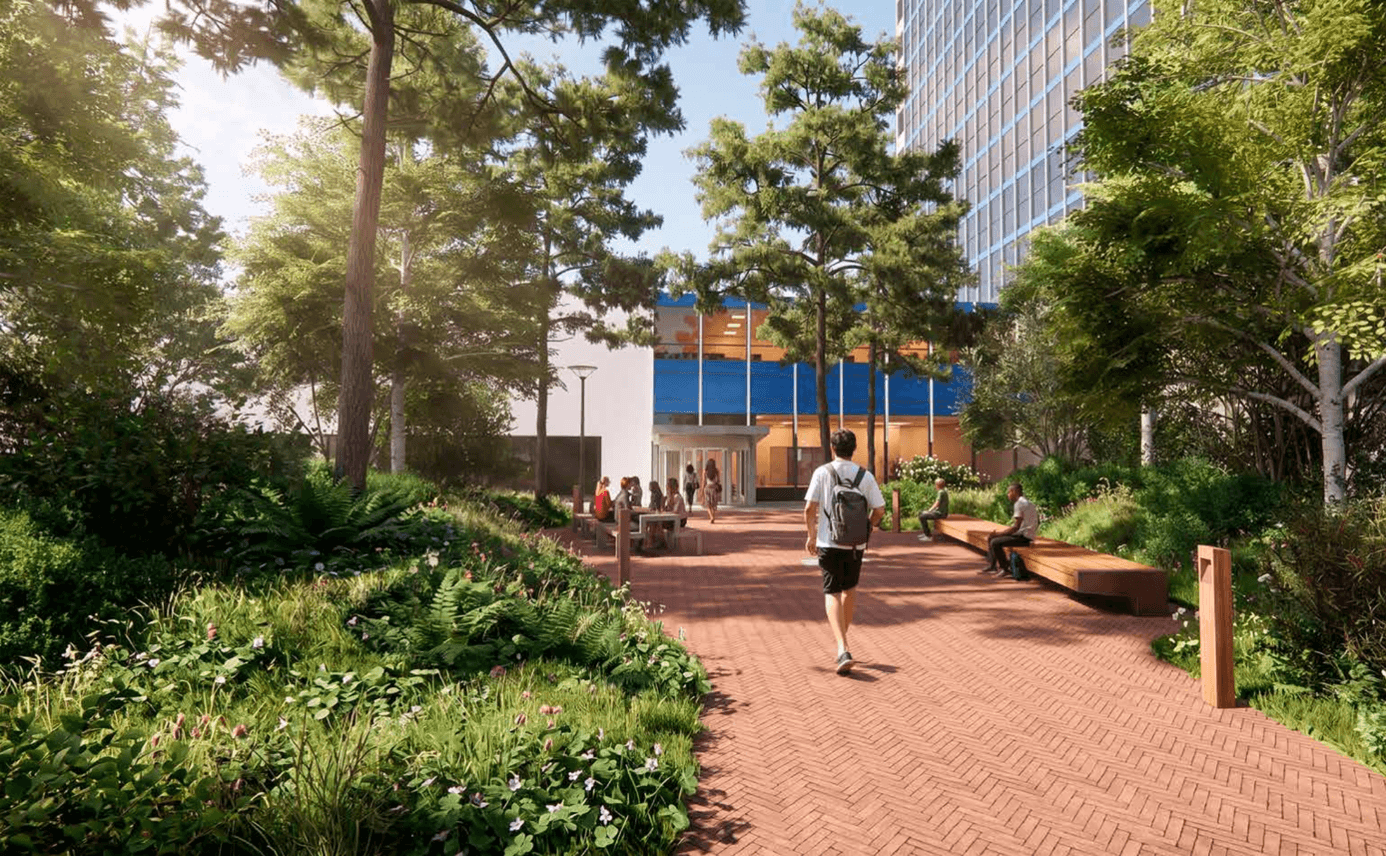
First Impression of the Greening of Feldmannweg Along EEMCS
Collaboration with Education and Research
Students from various faculties are actively involved in the design and implementation of the campus greening projects. Through this involvement, they gain valuable hands-on experience in nature-inclusive and climate-adaptive design within an urban environment. This enables them to develop a deeper understanding of ecological processes and the application of sustainable engineering concepts such as biomimicry and green engineering.
Biomimicry
The science and practice of emulating biological ideas and strategies found in nature to invent, improve or make human applications more sustainable.
Green Engineering
Green engineering is the development of engineering solutions that not only perform effectively but also minimise their environmental impact. From the outset, consideration is given to factors such as energy consumption, resource use, materials, waste generation and carbon emissions. In this way, technological innovation is combined with sustainability, contributing to a future-proof and resilient campus.
Greening and Depaving
Greening involves more than simply removing hard surfaces such as paving, footpaths and car parks. It also includes enhancing the quality and ecological value of existing green spaces. By increasing biodiversity and strengthening the connections between green areas, we improve habitats for both flora and fauna.
Particular attention is given to the development of potential ecological corridors, which provide green links between natural habitats and ecological hotspots. These connections help facilitate the movement and dispersal of plant and animal species, thereby supporting biodiversity across the campus.
The University Campus: Past and Present
Significant efforts are being made to green the campus. The amount of greenery on campus today is incomparable to what it was 60 to 70 years ago. Over the decades, the campus landscape has been transformed considerably, reflecting a growing commitment to biodiversity, sustainability and climate resilience.
Facts & figures
• In de projecten worden zadenmengsels gebruikt met in totaal meer dan 40 verschillende inheemse eenjarige en vaste soorten
• Aanplanting van ongeveer 15 soorten een- en meerstammige bomen
• Hiermee bieden we leefgebied voor veel verschillende diersoorten, waaronder:
o Merel
o Sperwer
o Egel
o Ruige dwergvleermuis
o Laatvlieger
o Argusvlinder
o Akkerhommel
o Gewone sachembij
Further Information
For more information about the works, please contact the Environmental Management team at omgevingsmanagement-crefm@tudelft.nl.