Newbuild Central ATES system on TU Delft Campus South
The TU Delft Campus is taking a big step towards a CO₂-neutral future with the drilling of thermal energy storage wells and the construction of a new aquifer thermal energy storage system (ATES). This plant is the heart of an innovative system that stores heat and cold in the ground and efficiently distributes this energy over various buildings on Campus South. The project contributes to making the energy supply more sustainable and supports the goal of being completely CO₂ neutral by 2030.
What is an aquifer thermal energy storage system?
An aquifer thermal energy storage system uses sources in the ground to store heat and cold. In the summer, heat from buildings is stored in the ground and then used for heating in the winter. And in the winter it is exactly the other way around. Then the cold from the winter is used in the summer for cooling. This energy is brought to the ATES system via pipes, where it is distributed to connected buildings. The result is a sustainable and efficient way of heating and cooling.
The aquifer thermal energy storage sources: energy from the soil
For the system, several wells are drilled in the subsurface of Campus South. These springs consist of deep wells in which water containing heat or cold is stored. The hot water is stored in a hot spring in the summer and pumped up again in the winter to heat buildings. The same happens with cold water for cooling. This natural storage in the ground allows energy to be reused efficiently and the consumption of fossil fuels remains minimal. In total, there will be at least 20 sources across Campus South, of which almost all of the first 12 have already been constructed.
The central ATES plant: the heart of the system
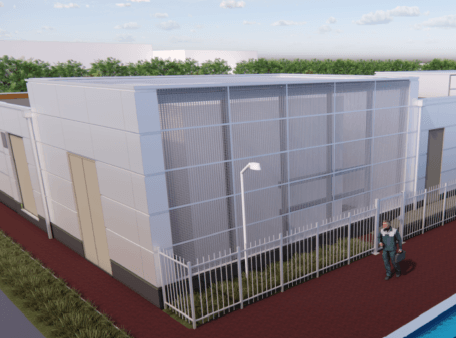
The plant will be built on Campus South and is strategically positioned to supply several buildings with energy. The design of the building is in line with the modern and sustainable character of the campus. Inside, the source pipes come together and the installations that ensure the distribution of heat and cold are placed.
Facts & figures
- At least 20 sources
- Approximately 10 km ATES pipes

Planning
Construction planning
The construction of the Central ATES plant will take place in several phases:
- Site layout: November – December 2025
- Drilling foundation piles: January 2026
- Foundation: January – April 2026
- Steel structure: May – June 2026
- Façade placement: July – October 2026
- Drilling of WKO wells at Huismansingel: September 2026 – January 2027
- Building-related installations: May – November 2026
- Developing the WKO wells at Huismansingel: November 2026 – March 2027
- Building completion: December 2026
- Primary installations in building: November 2026 – March 2027
- Final works and completion of the WKO wells at Huismansingel: March – April 2027